Thursday, January 29, 2015

Avoiding fruit to minimize sugar? Dispelling the myth that all sugar is bad

One of the more interesting diet fads I hear people talk about is the low carb diet, paleo, or (this one's new to me) the zero-sugar diet.  I'll discuss these together because obviously sugar is pure carbohydrate, but I think it's worth framing the conversation about what carbohydrates are made of.  Typically when nutritionists talk about a low-sugar diet, what they are usually advocating is low-processed sugars.  All whole healthy plant foods contain some natural sugars and no one disputes that these are the healthiest foods to eat...so let's get that out of the way.  Next, we must recognize that carbohydrates are a form of energy that can be made of simple or complex sugars or a combination.  Complex carbs are basically sugar molecules with fiber or dietary starch, vitamins and minerals and are found again in unrefined plant foods.  To keep it simple, think whole wheat (complex) bread vs. white bread, which should not be news to anyone.  But somehow carbs and sugar became the enemy, a midst a wave of public interest over the widespread use of sugar.
Reduce This
    It's absolutely true that most of the SAD (standard American diet) contains way too much added sugar. Avoiding processed foods with added sugars is a great way to eat healthier.  But avoiding all sugar or all carbohydrates is not only impossible, it's dangerous.  It means cutting out one of the primary sources of energy that humans require.  Again, let me make it clear.  Avoiding sweetening your coffee or tea with sugar is a great way to cut down on processed sugars.  Avoid eating unprocessed apples, oranges, beets and sweet potatoes?  Bad idea.  Complex carbohydrates like sweet potato and whole fruits are a wonderful source of energy bathed in vitamins and phytonutrients which are essential for good health and fight disease.
Eat More of This
Can you overdue it with fruit?  Sure.  But if you're eating unprocessed fruit, honestly how many apples can you eat?  While dried fruit like raisins and apricots should be eaten mindfully, the high water content of whole fruit is partly what makes you feel full.
    In fact research studies have shown that if you feed people an apple prior to eating a typical meal, they consume less total calories.  The researches concluded the reduction in overall calories is good because the fruit calories are more nutrient dense than the average dinner of pasta, pizza and burgers.  Eating for nutrient density does not have a fad diet behind it (maybe Dr. Fuhrman's Eat to Live) comes close, but it would be a much more mindful and practical diet than one trying to avoid all sugar.
    Dr. Gregor discusses the low-carb diet fads and points out that even using the proponents' own framework, you would eat the opposite thing.  Depriving yourself of wonderful whole fruits, vegetables and starches may seem to help some lose weight but the science shows that they would lose more weight and be healthier if they simply eat a healthier diet.

Sunday, December 21, 2014

Here Comes the Sun (Winter Solstice Celebration)

Sunday, December 21st is the shortest day and longest night of the year.  The Winter Solstice marks the shift toward days getting longer and is traditionally celebrated by yogis through Sun Salutations -- Surya Namaskar.


At community gatherings all over town, yogis are coming together to do 108 rounds of this yoga sequence.  This celebration offers an opportunity to express gratitude toward the sun through a moving meditation on energy and light.  Plants also respond to the longer cycles of light by shifting from storing sugars to increasing photosynthesis which will eventually lead to the greening Spring Blossom.  Like the plants I find I also begin to increase activity in the Winter, perhaps as an attempt to burn a bit of the extra sugar consumed during the sweet Winter Celebrations.
I've never had a huge sugar-tooth, so my indulgence in sweets is usually tempered by making them with whole food sweeteners like fruit pastes and purees.  This simple date paste is a staple in my fridge through the holidays.  For some, unprocessed sugars can be a bit underwhelming.  Perhaps this is because they don't spike dopamine production like regular sugar. Neuroscience of the sugar-brain response suggests that other stimuli, like music, produces similar reward feelings without the negative effects of over-stimulation.  So could eating whole food treats be enhanced by the music we listen to while we consume it?
This recent study suggests that what we hear does affect what we taste.

"You can then start creating experiences where you play particular kinds of music or soundscape to diners or to drinkers while they're tasting," Charles Spence [the author of the study] says. "We're able to show that we can change the experience in [the] mouth by about 5 or 10 percent."
As you celebrate today, enjoy your whole food plant based sweets with a happy soundtrack to make your Winter Solstice celebration even sweeter.  I'll be making these sunbutter truffles, which make the perfect post-sun salutation recovery snack, and listening to the Beatles.

Namaste.
More of my favorite happy tunes on Spotify

Wednesday, November 12, 2014

Tofu-Mushroom Neatballs

Last week I was inspired to make Jason Wrobel's "neatball" recipe so that I could bring a warm dish to a potluck but I didn't have a lot of time to prepare.  This recipe is very simple to make since most ingredients are processed together quickly and then formed into balls and baked.  Here is the original video and recipe from JWro and my modified take below.  I did not have any prepared seitan on hand, so I used pressed tofu and mushrooms to give a meaty yet soft juicy texture.

Tofu-Mushroom Neatballs:

Ingredients: (makes about 24 balls)
1 package extra firm tofu - pressed and drained
1 cup mushrooms, finely chopped
3/4 cup white onion, diced
1/2 cup breadcrumbs (fine)
1/3 cup parsley, finely chopped
1/4 cup red wine
2 cloves finely chopped garlic
1-2 tbsp ground flax seed
1/2 tsp sea salt
1/4 tsp fine black pepper
1 tsp fresh thyme
1/2 tsp cayenne chili powder or chipotle powder
1/4 cup nutritional yeast (or more bread crumbs)
1 Tbsp veg brother (or oil) for saute

Method:
Preheat oven to 425F.  In a large mixing bowl, combine the tofu, breadcrumbs, parsly, chili powder, flax seed and nutritional yeast.  In a saucepan, dry saute (or use oil) the onions until they soften a bit and then add the garlic and thyme, salt and pepper.  Add the mushrooms and saute for about 5-minutes deglazing with the red wine.  When your onion mushroom mixture has released most of its water and well-carmelized, do a final deglaze with the remaining wine and then add to the bowl with the tofu mixture.  Mix with wet hands, form into balls and arrange on a baking sheet lined with parchment paper or silicone baking pad.  Bake for about 15-minutes at 425 and finish warming in a marinara sauce or 20-minutes for a firmer, drier texture.


These go great with JWro's mushroom gravy or a nice cheezy sauce and a side of mash and steamed greens.

Thursday, October 16, 2014

Recipe: Super Socca

Socca is a fantastic gluten-free bread to make when you're short on time and want something warm and bread-like in a flash.  You can make socca, or chickpea crepe bread in about 15 minutes.  The base recipe is very simple. It's basically ground up chickpeas and water.

Ingredients:
1-cup chickpea flour
1-cup of water*
pinch of himalayan salt
minced herbs of choice (Rosemary, Thyme and Chives are agreat)
(optional) high-heat baking oil

Prep:


  1. Place a seasoned* pizza stone or a large cast iron skillet upside-down in the top rack of your oven.       *If your stone or skillet is not well-seasoned you may want to rub some coconut oil to prevent sticking.
  2. Preheat your oven to 500deg F with the pizza stone in it.
  3. Make your socca batter by combining the ingredients except for the water in a large mixing bowl, gradually adding just enough water to make a pancake-like batter.  More water will make a thinner, lighter dough.  Less water will be firmer.
  4. At this point you can add your favorite herbs.
  5. Let batter rest for about 10 minutes.
  6. Carefully (use high-heat oven mits!) take the pizza stone out of the oven and slowly pour the batter in the center.  If your pizza stone is small, you may need to do this in two batches.  Only pour enough batter so that it does not run over the edge.
  7. Let bake for about 3-5 minutes.  It should start to puff up a bit as air pockets escape.
  8. Carefully remove the pizza stone from the oven and use a flat spatula to lift up the edges.  If it starts to fall apart, you may need to cook another minute until you can lift up the dough and flip it.
  9. Cook for another 1-min on the other side.
  10. Remove from oven and enjoy!  I like to use traditional pizza toppings like tomato and pesto and roll it up like a slice of Brooklyn tomato pie.


Super Socca Pizza Wrap:
Prepared socca, homemade pesto, fresh tomato slices and chives.

Friday, October 10, 2014

Recipe: Pumpkin Pie Kale Chips

The changing color of the leaves never fails to delight and surprise us.  As days get shorter and shorter, the trees and plants prepare for cooler weather by slowing down photosynthesis so they can store up energy for Winter.  The array of colors we see were in the leaves all along, just covered by the constant greening from photosynthesis.  This is a wonderful reminder that we too have within us a pallet of untapped energy, colors that make us shine if we remove barriers of bad habits and use our energy efficiently.
Another way plants respond to cooler temps is to store up their sugars.  This is why carrots and leafy greens like kale get especially sweet around Autumn.  Like the plants and trees, people benefit from storing energy and choosing foods that keep us nourished and warm in the fall.  I love making soups, stews and chili throughout the cooler months.  They can be comforting and also highly nutritious because you preserve more of the nutrients by consuming the broth that cooks them.  Until it gets very cold, I still try to get a fair amount of raw (especially calciferous) vegetables which have their living enzymes in tact.  However this gets more challenging in the Winter.  It takes a lot of energy to digest raw foods.  So one way that I ensure I still get my raw veggies in the cooler months is to make dehydrated crucifers.
Kale chips are easy to make and strike a good balance between raw nutrition and comforting taste.  A lot of kale chips have nuts in them, for example this wonderful cashew cheese sriracha version.  So if you are looking for a lighter snack, I like to make them with alternatives.  I've been playing around with winter squash and cooked sweet potato as another way to get creamy texture and sweet flavors. Recently I stumbled upon a Pumpkin kale recipe that I had to try.  The original recipe can be found over at Fragrant Vanilla Cake.  I made a few modifications but for the most part this is Amy's creation that I've borrowed from liberally.

No Oil Pumpkin Pie Kale Chips

Ingredients

2-bunches of kale
2-cups of pumpkin puree
4-ripe organic pears*, seeds removed
2-inches of ginger
1-tbsp pumpkin pie spice
2-tsp vanilla
filtered water as need

(*optional ingredients, if using nuts, omit the pears above)
2-tbsp maple syrup
3/4 cups soaked cashews


Process


  1. Gather your mise-en-place.  Once you get going, your hands are going to get sticky :-)
  2. Wash and dry your kale.
  3. Break kale into bit size pieces but don't worry about massaging yet, that comes later. Put into a LARGE mixing bowl.
  4. Set up either 2 to 4 dehydrator trays with parchment paper or 2 to 4 large cookie trays with parchment if using an oven*.
  5. *(If using the oven method) set your oven to the lowest temperature possible, 150-200 deg Fahrenheit will work best.
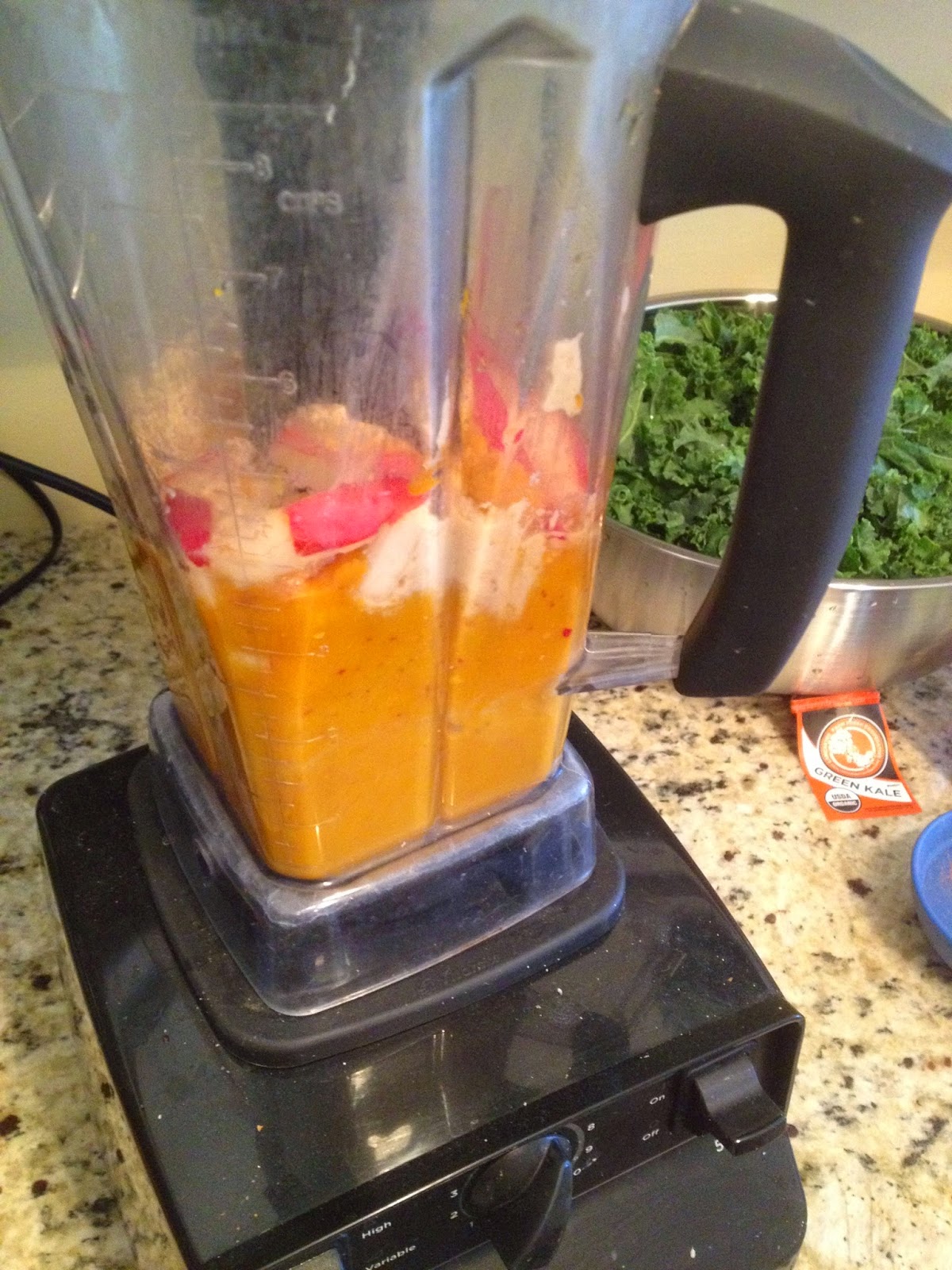
  6. Create the "pie dressing" by putting all remaining ingredients in a high powered blender.
  7. Blend, adding only as little water as you need to help get things moving.You want a creamy thick sauce without any visible chunks.
  8. Pour dressing over kale.

Sunday, October 5, 2014

Rise Power Plant Based Yogi Snacks

Today I had the pleasure of sharing post-yoga snacks at the grand opening of Rise Power Yoga in Princeton.  The owner of the studio, Annie, invited me to provide treats for hungry yogis after a two hour special class.  I'd never catered an event like this on my own but I was inspired to rise to the occasion ;-)  It was a special celebration and I am overjoyed to be a part of it.  Most of the yoga teachers that have gone on to start their own studios in the area have roots in the space that Rise occupies.  Today Annie shared how she first taught in Princeton years ago at this space that was Yoga Above and when it closed had a vision to breath new life and energy in this already vibrant community.

When I was asked to provide snacks after a yoga class, I thought I would make a trio of treats that provide quick nourishment and satisfy sweet, savory and salty cravings after a long-sweat in class:

I played around with the recipes but here are the inspirations:


I made two batches, one with added melted dark chocolate vanilla and chia seeds, the other with maca roots and vanilla sun warrior protein.

  • Raw Vegan Cookie Dough made into Truffles with Coconut, Cacao, Goji, and Traditional Chocolate Chip, inspired by Oh She Glow.
Using four batches as the base, I made four different kinds by rolling them in different toppings.  My favorite was a crumble I made from organic goji berries, muldenberries, golden berries and raw cacao, although I ran out of the vanilla coconut balls so that may have been an audience favorite.


  • Two kinds of kale chps.  One double batch of Pumpkin Spice Kale from the awesome Fragrant Vanilla Cake blog and  a double batch of my own standby super-yummy raw kale mixed with cashew cheez and sriracha.

I'll post the full recipes and process for each this week.  Thank you to all who came, hope you enjoyed the snacks and enjoyed yoga today :D